Usa Wire Magazine Publishes Feature Interview with Pianist and Educator Dr. Yi Wang
The Chinese pianist on her Carnegie Hall performances, her recording project Breaking My Silence, and her mission to

Press Release Disclaimer: This is a press release distributed through the XPR Media network. It has not been independently verified by our newsroom.
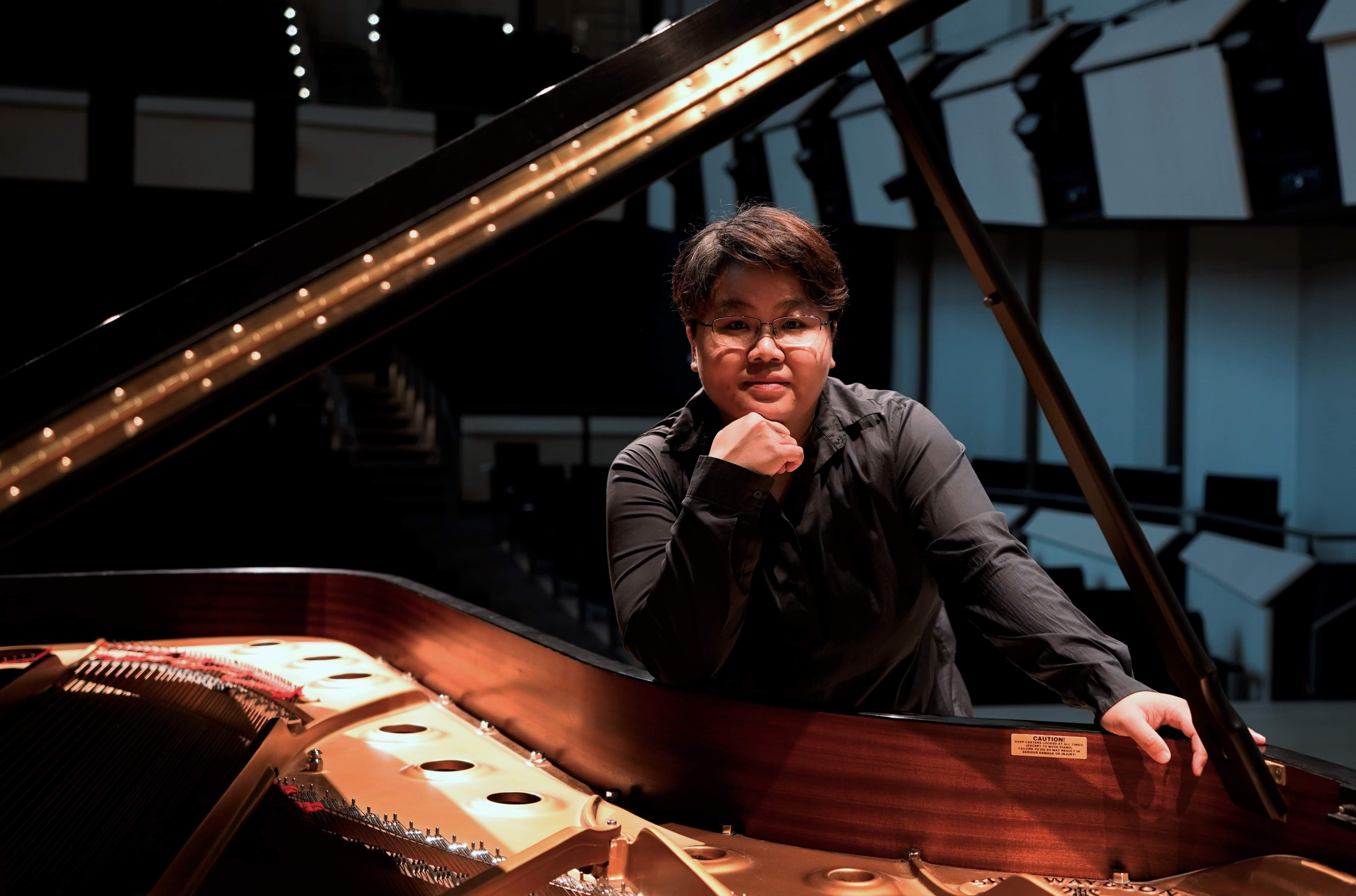

The Chinese pianist on her Carnegie Hall performances, her recording project Breaking My Silence, and her mission to champion overlooked women composers
CHELSEA, MANHATTAN, NY, UNITED STATES, July 27, 2026 /EINPresswire.com/ — USA Wire Magazine has published an extensive feature interview with Dr. Yi Wang, a Chinese pianist, educator, and artistic advocate based in New York. The interview appeared this week in the magazine’s current issue and offers readers a rare, candid look at one of the city’s most compelling musical voices. Across sixteen questions and a detailed introduction, Dr. Wang reflects on her unconventional path to the concert stage, the artistic vision behind her doctoral recording project, and the teaching philosophy that has shaped a generation of young pianists in New York.
The feature arrives at a moment of growing public interest in the music of historically overlooked composers. Consequently, Dr. Wang’s perspective speaks directly to a conversation now unfolding across concert halls, conservatories, and recording studios. Her message throughout the interview remains consistent and clear. Classical music grows stronger when more voices join it, both on the page and at the keyboard.
An Unconventional Path to the Stage
Dr. Wang holds a Doctor of Musical Arts in Piano Performance and Pedagogy from the University of Iowa and a Master of Music from the Manhattan School of Music, where she studied with Dr. Inesa Sinkevych. She completed her doctoral work under Dr. Alan Huckleberry while balancing university teaching, collaborative performance, and academic research. She has performed as a soloist at Carnegie Hall and has earned honors from international competitions across four continents. These include First Prize at the New York Classical Music Competition, Second Prize at the American Virtuoso International Music Competition, and recognition from the European Music Competition, the International Moscow Music Competition, and the Hong Kong International Liszt Piano Competition.
However, as the interview reveals, none of this success came easily. Dr. Wang first noticed the piano as a small child in China after seeing one on television and thinking it looked like a giant toy. Her mother, who had once dreamed of becoming a violinist, encouraged that early fascination. Yet teachers soon told the young pianist that she was not naturally suited for the instrument. She struggled to sit still through long practice sessions. She found memorization unusually difficult. Additionally, her small hands made the demanding repertoire of Liszt, Chopin, and Rachmaninoff feel physically out of reach.
Instead of surrendering to those judgments, she built her own way of learning. In the interview, she describes analyzing scores like mathematical problems, searching for patterns in harmony, rhythm, and form. Once she understood how a piece was built, her memory and confidence improved dramatically. That analytical method carried her through a language barrier during her early years in the United States, when she taught music theory to herself after class, one concept at a time. Today, the same method anchors her work with students at Musyi Piano Studio, her educational community in New York.
Breaking My Silence
At the heart of the interview stands Breaking My Silence, Dr. Wang’s doctoral recording project. The project grew from a simple question that she poses directly to readers. Why had she spent more than twenty years studying classical piano while encountering so few works by women composers? Her search for an answer led her far beyond the standard repertoire. What she found, she explains, was not a lack of artistic quality. Rather, she discovered a remarkable body of music that had never received the same opportunities to be heard.
The recording features solo piano works by five composers spanning two centuries. Ethel Smyth combines Romantic lyricism with extraordinary structural imagination. Henriëtte Bosmans merges French impressionistic colors with an expressive harmonic language shaped by the turbulence of the early twentieth century. Jennifer Higdon writes with a vibrant, contemporary American lyricism. Eve Beglarian blurs the boundaries between minimalism, storytelling, and experimental sound. Finally, Annea Lockwood redefines the piano itself through extended techniques and prepared piano sonorities.
The interview also explores the meaning behind the project’s title. For Dr. Wang, the title marks the moment she began speaking up through her programming choices rather than simply preserving the traditional canon. It also celebrates the composers themselves, whose voices history silenced through unequal access to publishing, performances, and recognition. She emphasizes that she champions this music because of its excellence. Nevertheless, understanding the obstacles these composers faced helps audiences appreciate the determination their careers required. Every performance of this repertoire, she explains, breaks a silence that never should have existed.
“Music is not about mastering an instrument,” Dr. Wang says in the interview. “It is about finding your own voice, and then helping others find theirs.”
A Teacher Shaped by Her Own Struggles
The feature devotes substantial attention to Dr. Wang’s work as an educator, which she describes as inseparable from her performing life. Because she experienced the frustrations of learning music firsthand, she believes every student deserves an individualized approach. She adapts each lesson to the student’s personality, interests, age, and learning style. For analytical students, she explains musical structure through mathematical logic. For imaginative ones, she reaches for storytelling, visual images, or examples drawn from everyday life.
Her results speak clearly. Her students have earned Distinction awards from ABRSM, top and perfect scores in NYSSMA examinations, prizes in piano competitions, and admission to prestigious programs such as Manhattan School of Music Precollege. Beyond those measurable outcomes, however, she defines success differently. In the interview, she names confidence, curiosity, artistic independence, and a lifelong love of music as the true goals of her teaching. She also discusses the essential role of parents, encouraging active involvement during a child’s early study followed by a gradual handover of independence.
The conversation closes with her plans for the future, including continued advocacy for overlooked repertoire and the ongoing growth of Musyi Piano Studio. She ends with direct advice for young musicians who have ever heard the word unsuited. Question the mold, she urges, before you question yourself.
The full interview is available in the current issue of USA Wire Magazine and on the publication’s website.
About Dr. Yi Wang
Dr. Yi Wang is a Chinese pianist, educator, and artistic advocate based in New York. Her career spans solo recitals, chamber music, collaborative performance, and community outreach at hospitals, senior communities, and cultural centers throughout the United States and internationally. She earned her Doctor of Musical Arts from the University of Iowa and her Master of Music from the Manhattan School of Music. Through performance, research, recording, and teaching, she works to expand the visibility of underrepresented voices in classical music and to help every student discover an individual path to musical understanding.
Max A.Sciarra
New York Team
email us here
Legal Disclaimer:
EIN Presswire provides this news content “as is” without warranty of any kind. We do not accept any responsibility or liability
for the accuracy, content, images, videos, licenses, completeness, legality, or reliability of the information contained in this
article. If you have any complaints or copyright issues related to this article, kindly contact the author above.

Media gallery