
Inside the Tech: JURRY as a Top Industrial CPVC Chemical Pipe Extrusion Line Supplier at Chinaplas
KUNSHAN, JIANGSU, CHINA, November 16, 2026 /EINPresswire.com/ -- During staging editions of Chinaplas, material

Press Release Disclaimer: This is a press release distributed through the XPR Media network. It has not been independently verified by our newsroom.
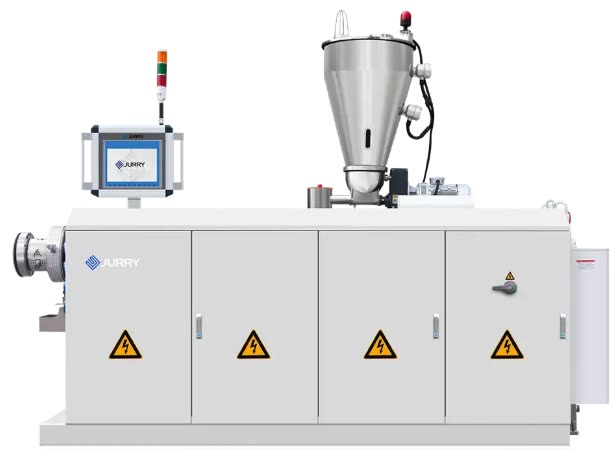

KUNSHAN, JIANGSU, CHINA, November 16, 2026 /EINPresswire.com/ — During staging editions of Chinaplas, material specialists and processing engineers observed how chemical fluid conveyance systems place extreme stress on polymer hardware. The processing of Chlorinated Polyvinyl Chloride presents distinctive rheological challenges that necessitate precise engineering controls rather than standardized machinery configurations. As visitors evaluated modern fluid infrastructure at this industry gathering, Shanghai Jurry Plastics Machinery Co.,Ltd. demonstrated its engineering frameworks tailored specifically for high-chlorine formulations. Serving international markets as a top industrial CPVC chemical pipe extrusion line supplier, the enterprise presented machine architectures built around thermal stability and strict operational parameters. Industrial fluid conveyance relies on consistent resin gelatinization, making machinery precision critical for long-term pipeline safety in corrosive environments.
Material Constraints in Processing High-Chlorine Polymers
Chlorinated Polyvinyl Chloride features a high chlorine content, typically reaching 63% to 69% by weight, which significantly elevates heat resistance and mechanical strength compared to standard formulations. However, this chemical structure drastically reduces the processing temperature window of the polymer resin. The material exhibits high melt viscosity and tends to degrade rapidly when exposed to excessive shear rates or prolonged thermal exposure. Thermal decomposition releases hydrogen chloride gas, which acts as a catalyst for further polymer degradation and damages internal metal machinery surfaces.
Consequently, processing units must maintain restricted melt residence times while preventing localized overheating within the barrel. Machinery geometry dictates whether the polymer achieves homogeneous fusion without triggering thermal breakdown. The narrow window between complete plasticization and thermal degradation sets strict requirements for machinery design, serving as the foundational engineering constraint for downstream processing decisions.
Extrusion Segment Dynamics and Thermal Controls
Addressing these material limitations requires specialized drive systems and auger geometries within the initial processing segment. JURRY incorporates custom twin-auger configurations engineered with low-shear profiles and optimized flight pitches to process dense compounds smoothly. These specialized augers facilitate uniform material transport while minimizing friction-induced heat generation across varying production speeds. The mechanical setup promotes thorough thermal absorption without forcing mechanical stress onto the raw resin matrix.
Subsequent thermal management relies on multi-zone temperature control systems installed along the barrel. Each heating and cooling zone operates with tight feedback loops to prevent localized thermal spikes that would otherwise compromise melt integrity. Shanghai Jurry Plastics Machinery Co.,Ltd. integrates precision sensors and zoned cooling channels to maintain strict thermal boundaries during continuous operation. Balanced shear distribution and exact thermal calibration ensure that the plasticized melt reaches the downstream tooling with uniform viscosity and stable chemical properties.
Die Head Fluid Dynamics and Downstream Calibration
Transitioning the molten polymer into a structural pipe profile occurs inside the extrusion die head, where internal geometry determines long-term mechanical strength. Die heads designed for chemical conveyance utilize streamlined, polished flow channels that eliminate stagnant regions where degraded resin could accumulate. Balanced melt distribution around the central mandrel prevents weld line weaknesses, which are common failure points in pressurized chemical pipelines.
Liquid polymer enters the die structure under controlled pressure gradients to ensure symmetrical flow paths.
Streamlined spider legs divide and re-merge the melt without creating structural boundary flaws.
The internal flow surfaces maintain ultra-smooth finishes to reduce skin friction during wall formation.
Upon exiting the die, the hollow profile enters vacuum calibration units to establish precise outer dimensions and roundness. Downstream equipment plays a vital role in maintaining strict wall thickness tolerances required for industrial pressure ratings. Shanghai Jurry Plastics Machinery Co.,Ltd. equips its downstream lines with servo-driven haul-offs that maintain smooth, continuous pulling tension. Constant haul-off speed prevents dimensional surging, while multi-stage water cooling baths systematically freeze the molecular structure, stabilizing pipe dimensions to withstand demanding chemical transportation environments.
Industrial Application Boundaries and Verification Standards
Pipelines fabricated using a dedicated industrial CPVC chemical pipe extrusion line serve demanding industrial environments, including chemical processing plants, mineral processing facilities, and industrial wastewater treatment networks. These pipes reliably convey concentrated acids, alkalis, and hot corrosive liquids across wide operational temperature spectrums. To ensure long-term pressure ratings, processing parameters must remain fully verifiable throughout every production run. System controllers monitor melt pressure, auger velocity, and zone temperatures, generating steady operational logs required for technical verification.
To support complex manufacturing setups, a reliable CPVC chemical pipe extrusion line supplier provides integrated control platforms that facilitate parameter tracking across the entire production line. Processors rely on repeatable machine settings to satisfy stringent international testing protocols for impact resistance and hydrostatic pressure. By standardizing machine responses, facilities reduce material waste during startup phases while maintaining consistent wall density across full production cycles.
Comprehensive Infrastructure and Technical Capabilities
Engineering robust manufacturing machinery requires comprehensive manufacturing facilities and sustained research investments. Shanghai Jurry Plastics Machinery Co.,Ltd. operates a production base spanning 40,000 square meters, supported by a skilled workforce of over 200 dedicated professionals. Over years of development, the enterprise has supplied more than 4,100 plastic extrusion solutions to industrial clients across more than 120 countries. This broad international footprint provides the company with deep insights into varied regional standards and diverse raw material characteristics.
Operating as a top industrial CPVC chemical pipe extrusion line supplier, JURRY focuses on optimizing machine efficiency while reducing energy consumption through smart drive systems. Modern industrial facilities require production lines that interface directly with broader factory automation networks. By incorporating Industry 4.0 communication protocols, processing lines enable real-time diagnostic monitoring, predictive maintenance scheduling, and remote operational adjustments.
Engineering advances continue to expand the operational capabilities of high-temperature polymer extrusion equipment globally. Shanghai Jurry Plastics Machinery Co.,Ltd. remains focused on refining auger designs, fluid dynamics inside die heads, and energy-efficient downstream automation. Through structured processing controls, modern extrusion lines provide the chemical sector with reliable infrastructure materials capable of handling aggressive fluid media over extended service lifetimes.
Learn more about industrial extrusion technologies and system configurations at www.jurryextrusion.com.
JURRY
JURRY
Legal Disclaimer:
EIN Presswire provides this news content “as is” without warranty of any kind. We do not accept any responsibility or liability
for the accuracy, content, images, videos, licenses, completeness, legality, or reliability of the information contained in this
article. If you have any complaints or copyright issues related to this article, kindly contact the author above.

Media gallery



