
TGI Group Publishes Research Report on Global Water Bankruptcy and Groundwater Contamination in Mexico’s Yucatán Peninsula
TGI Group Research Team, led by geologist Samuel A. Epstein, applies UN findings to every inhabited continent and

Press Release Disclaimer: This is a press release distributed through the XPR Media network. It has not been independently verified by our newsroom.


TGI Group Research Team, led by geologist Samuel A. Epstein, applies UN findings to every inhabited continent and outlines brine-free water technologies in development
MIAMI BEACH, FL / ACCESS Newswire / November 24, 2026 / TGI Solar Power Group Inc. (OTCID:TSPG), today released the research report Global Water Bankruptcy & Decentralized Circular Solutions: Hydrogeological Realities, Emerging Contaminants, and Next-Generation Water Independence. The research was conducted by the TGI Group Research Team, led by Samuel A. Epstein, CEO of TGI Solar Power Group Inc.
The report is published ahead of the 2026 UN Water Conference, co-hosted by the United Arab Emirates and Senegal, which takes place in Abu Dhabi on Dec. 8-10.
It reviews the 2026 global water assessment by the United Nations University Institute for Water, Environment and Health (UNU-INWEH), recent peer-reviewed studies of contamination in the Yucatán Peninsula’s karst aquifer, and the engineering case for decentralized treatment that avoids the brine waste of reverse osmosis.
The report builds on Mr. Epstein’s earlier work in the Yucatán. He synthesized published geochemical and hydrological data on the Chicxulub Ring of Cenotes and proposed a water-quality monitoring program for cenotes near Sotuta, Yucatán, to track the effects of population growth on contamination. The work was presented at the Geological Society of America’s Joint Northeastern/North-Central Section Meeting in March 2025.
Key Global and Continental Findings
UNU-INWEH concluded in January 2026 that the world has entered an era of “global water bankruptcy,” in which many aquifers, rivers, lakes and glaciers have been drawn down beyond realistic recovery. UN figures cited in the report include:
- About 2.2 billion people lack safely managed drinking water, and about 4 billion face severe water scarcity for at least one month each year.
- About 70% of the world’s major aquifers show long-term decline.
- Land subsidence linked to groundwater over-pumping affects more than 6 million square kilometers, home to nearly 2 billion people.
- Lost wetland ecosystem services are valued at about US$5.1 trillion a year.
Building on United Nations data, the report finds serious and growing deficiencies on every inhabited continent:
- Africa: North Africa withdraws more water than nature renews; the Sahara and Sahel face chronic aridity and recurrent drought; the Horn of Africa and southern Africa suffer repeated severe droughts; and sub-Saharan Africa has the world’s lowest drinking water coverage.
- Asia: The Middle East is the most water-scarce region on Earth. Aquifers are falling fastest across South Asia’s Indo-Gangetic Plain, where many wells also carry natural arsenic or fluoride. The North China Plain shows long-term groundwater depletion, and Central Asia bears the legacy of the Aral Sea and a falling Caspian Sea.
- Europe: Southern and Mediterranean regions face recurring drought and aquifer over-pumping, while nitrate and “forever chemicals” affect water sources across the continent.
- North America: The High Plains (Ogallala) Aquifer and California’s Central Valley show major storage loss and land subsidence, and the UN reports that parts of Mexico City are sinking by up to 25 centimeters a year.
- Latin America and the Caribbean: Arid zones of Chile, Peru and northern Mexico are under growing pressure, Andean glaciers are retreating, and the Yucatán Peninsula’s karst aquifer is acutely vulnerable to contamination.
- Oceania: Australia faces severe drought cycles and interior aridity, and many Pacific islands depend on thin freshwater lenses threatened by sea-level rise.
- Deserts worldwide: In the Sahara, Arabian, Gobi, Thar, Atacama and Australian deserts, fossil groundwater that recharged thousands of years ago is being depleted, a loss that is effectively permanent on human timescales.
Yucatán Peninsula Focus
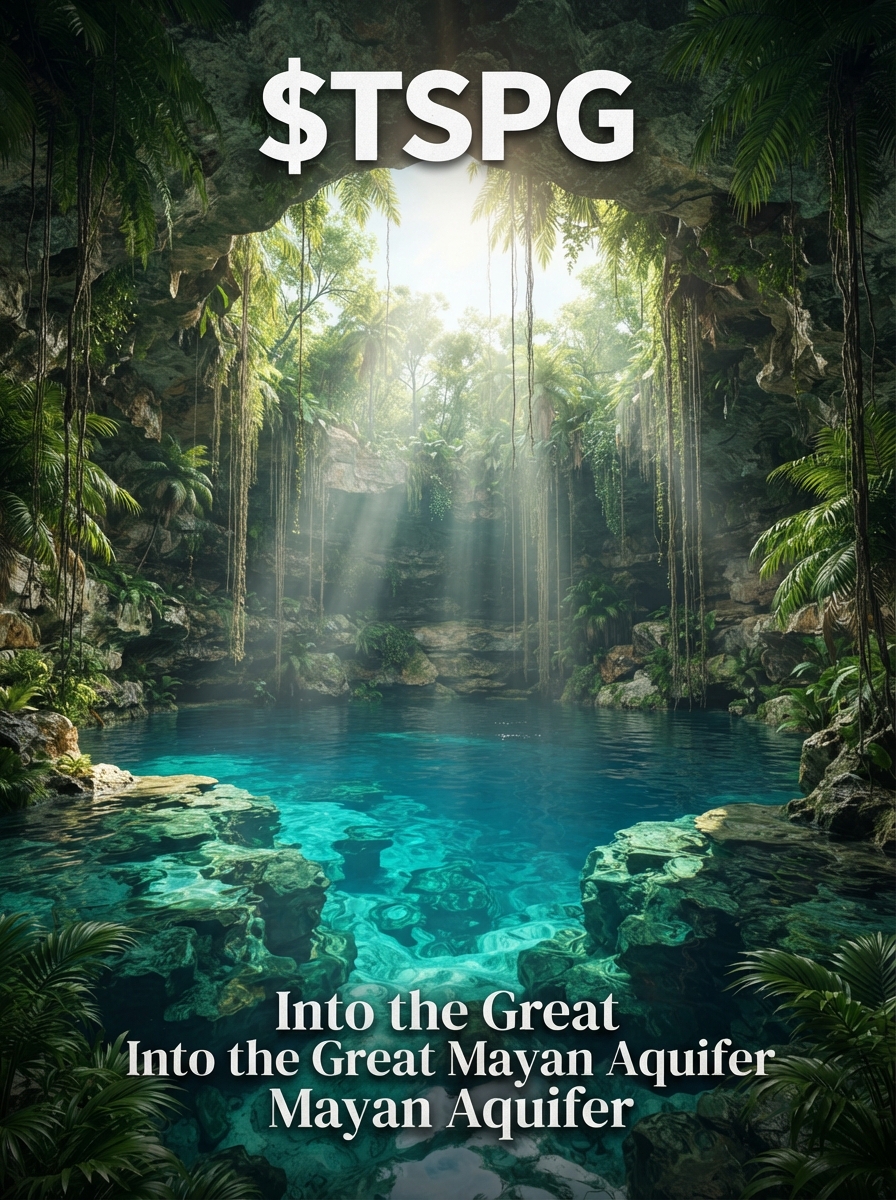
Rain on the Yucatán drains straight through porous limestone into the Great Mayan Aquifer, the region’s only freshwater source. The report reviews peer-reviewed findings of fecal bacteria, including antibiotic-resistant strains, elevated lead and nitrate, PFAS, and sunscreen chemicals linked to tourism and hurricane runoff in the aquifer and its cenotes. Most households buy bottled or jug water because tap water is widely considered unsafe to drink.
“You cannot negotiate with hydrogeology,” said Samuel A. Epstein, CPG, who led the TGI Group Research Team. “When an aquifer is pumped faster than it recharges and a karst system receives untreated waste, centralized infrastructure alone cannot keep pace. Communities need treatment at the point of use that removes contaminants without producing a new waste stream.”
R&D Developments from TGI Group’s R&D Affiliate
The report outlines two complementary systems under development by TGI Group’s R&D and engineering affiliate. All performance figures are design targets, and independent third-party testing is planned against World Health Organization drinking-water guidelines and Mexico’s drinking-water standard, NOM-127-SSA1-2021.
- Gravity-fed multi-stage purification. Proprietary media and biochar made from Sargassum seaweed, followed by ultraviolet disinfection, are designed to capture heavy metals and organic contaminants while retaining beneficial minerals and producing no concentrated brine.
- Atmospheric water generation. A Sargassum-based desiccant is designed to capture moisture from the air, including at low relative humidity, and to release it using low-grade solar or waste heat. The approach is designed to use less electricity than conventional compressor-based units and puts Sargassum biomass to productive use.
Both systems are intended for municipalities, resorts, remote communities and emergency response under a Water-as-a-Service model, in which customers pay for treated water instead of large upfront equipment costs.
Full Report
The full report is available on request from info@tgipower.com. Mr. Epstein is available for interviews.
About TGI Group
TGI Group, including TGI Solar Power Group Inc. (OTCID:TSPG), is a Miami-based clean-technology, AI infrastructure and circular-economy engineering group active in North America, Latin America, Europe and Central Asia.
Media Contact
TGI Group Media Relations
info@tgipower.com
www.tgipower.com
Note on Third-Party Research
United Nations data and peer-reviewed studies are cited for context only. The United Nations and the studies’ authors did not participate in, review or endorse the report or the technologies under development by TGI Group’s R&D affiliate.
Forward-Looking Statements
This release contains forward-looking statements concerning technology performance, development, testing, certification and deployment. The systems described remain in development and have not completed independent testing or certification. Actual results may differ materially, including for reasons described in TGI Solar Power Group Inc.’s disclosures on OTC Markets. TGI Group undertakes no obligation to update these statements.
SOURCE: TGI Solar Power Group, Inc.
View the original press release on ACCESS Newswire
Media gallery



