
Zhejiang Giantele Supplies Two-Phase Power Distribution System for EV Motor Plant in Serbia
Just another WordPress site

Press Release Disclaimer: This is a press release distributed through the XPR Media network. It has not been independently verified by our newsroom.
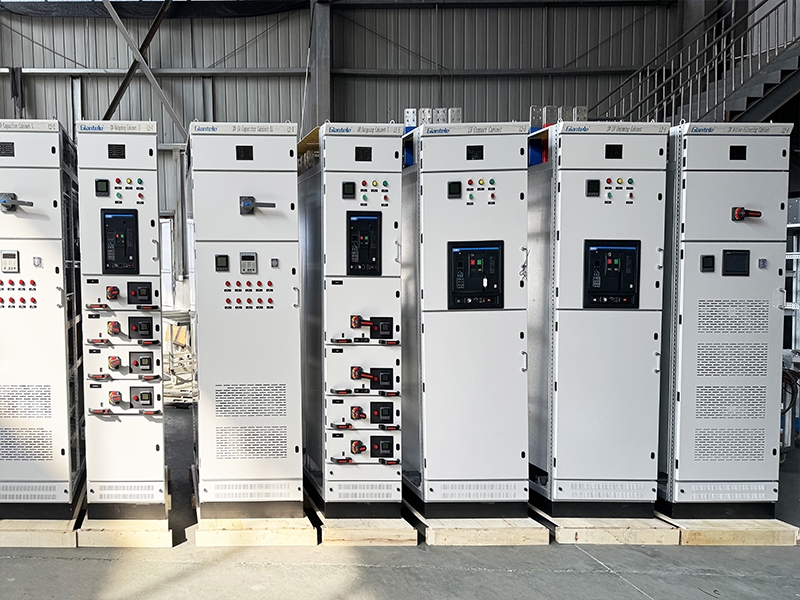

Zhejiang, China – September 7, 2026 – Giantele (Zhejiang Zhegui Electric Co., Ltd.) has completed the supply of power distribution equipment for both construction phases of an electric motor component factory in Apatin, Serbia, operated by a subsidiary of a Chinese automotive component manufacturer listed on the Shenzhen Stock Exchange. Phase one of the plant is already energized and supplying power. Energization of phase two is scheduled. Across the two phases, Giantele delivered 29 withdrawable low-voltage switchgear panels, 74 distribution boxes, a busway system and a 1,600 kVA dry-type transformer, covering the plant’s power rooms from the incoming supply to the final circuits.
The plant produces laminated cores for electric vehicle motors, the magnetic structure at the center of an EV drivetrain, and its output targets customers in the European Union. The project has received state support under Serbia’s industrial investment program.
The order is part of Giantele’s broader export business. The company has delivered switchgear to factories, substations and distribution projects in more than 50 countries since 2013 and treats export orders as its core workflow rather than an exception. Projects of this scale exercise the full chain: engineering to the destination standard, export packaging, logistics and remote commissioning support.
Giantele was contracted to equip the power distribution rooms for both project phases, so that phase two could be built on the same electrical layout as phase one. Phase one has been energized and is running the plant’s first production lines. Phase two equipment has been delivered and installed, with energization scheduled in coordination with the plant’s commissioning program. Because one supplier handled both phases, the two power rooms share the same panel platform, the same protection philosophy and the same documentation format, which shortens the work of the plant’s electrical teams during commissioning.
What Was Delivered
The phase one package, quoted in December 2024 and delivered through 2025, comprised 15 withdrawable low-voltage switchgear panels and 54 distribution boxes. The switchgear included two incoming panels, one bus coupler, six outgoing panels, two 250 kVAR capacitor main banks, two 250 kVAR capacitor auxiliary banks and two 300 A active harmonic filter panels. The incoming panels were supplied with busbar connections running to the transformer, and the bus coupler section included its own busway. The distribution boxes cover the factory’s circuits, from lighting and power outlets to compressor, HVAC and process loads.
The phase one specification also included a 1,600 kVA dry-type transformer rated 20/0.4 kV at 50 Hz, built to the project’s technical requirements: epoxy resin insulation, Dyn11 connection group, 24 kV insulation level, and type testing according to the standards that apply to dry-type transformers in Europe. The unit is equipped with temperature monitoring, with three PT100 sensors and a digital thermometer, and its cooling system allows a higher rated load at peak demand.
The phase two order, quoted in September 2025 and shipped in September of the same year, added 14 withdrawable low-voltage switchgear panels, 20 distribution boxes and one 3,200 A busway system. The second set of panels mirrors the first: two incoming, one bus coupler, four outgoing, four capacitor banks and two active harmonic filter panels, so the two power rooms run on the same arrangement.
In total, the two phases account for 29 switchgear panels and 74 distribution boxes, plus the transformer and busway. The plant’s electrical team worked from a single set of drawings and one documentation format across both phases, which is the arrangement the customer wanted when it chose a single supplier for the whole program.
Designed for an Export Project
The order was engineered in China and built for a European site, which shaped every step. Panels were produced to the project’s electrical drawings, with single-line diagrams and component schedules agreed before production. The switchgear is built on a withdrawable platform: drawer sections can be pulled out for servicing while the rest of the board stays energized, which matters for a plant running continuous production lines.
Enclosure and protection were set for the site’s conditions. Panel dimensions, busbar ratings and protection schemes were adapted to the load list, and the equipment was packed for sea freight and shipped to Serbia. Commissioning was supported remotely, with the plant’s team working from English documentation. The company’s five-step process, from requirements confirmation through solution design, quotation with technical disclosure, production and after-sales support, applied to both phases.
The Product Platform Behind the Order
The Apatin delivery comes from the company’s low-voltage switchgear platform, which covers motor control centers (MCC), variable frequency drive (VFD) panels, automatic transfer switch (ATS) panels and distribution boards (DB), in fixed or withdrawable designs at 0.4 kV.
Motor control centers group starters, contactors and protection for electric motors, with drawer sections that can be withdrawn while the rest of the board stays energized. VFD panels house frequency converters for speed control on pumps, fans and conveyors, cutting energy use on loads that run below full speed. ATS panels switch between two power sources, typically mains and generator, and return automatically once the mains supply is stable. Distribution boards feed downstream circuits through molded case circuit breakers and busbar systems sized to the site demand.
The project also used the company’s power factor correction range. The capacitor banks compensate reactive power on the plant’s inductive loads, and the active harmonic filter panels handle the current distortion that comes from variable speed drives and other nonlinear equipment. For a factory full of motors and drives, that combination is what keeps power quality inside the limits the utility expects. Because all configurations share one enclosure and busbar platform, sections can be mixed inside one continuous board and added later without re-engineering the existing assembly.
Compliance and Testing
The equipment was built to the standards that apply to the destination market. The switchgear is designed and type-tested to IEC 61439, carries CE marking, and the distribution boxes were CE certified before shipment. The transformer follows IEC 60076 and the applicable dry-type transformer standards. Management systems are certified to ISO 9001 for quality, ISO 14001 for the environment and ISO 45001 for occupational health and safety.
Each panel leaves the plant with a qualified inspection certificate covering the routine tests performed on that specific unit: insulation testing, wiring checks and functional verification of protection and control circuits. Type test certificates, routine test reports and component certifications were compiled into a delivery package in English, so the customer’s engineers and any local inspector could verify the equipment without translation. Test records and datasheets are kept on file and can be shared with third-party inspectors on request, which the project team used when preparing the handover package for both phases. A warranty of 12 to 24 months applies depending on the product line.
Chinese Manufacturers Going Global
The Apatin project sits inside a larger trend. Chinese manufacturers in the automotive and new-energy sectors have been setting up production in Southeast Europe, drawn by access to the EU market, industrial policy support and a regional supply chain that is reorganizing around electric vehicles. Serbia has received a visible share of this investment. For these projects, electrical distribution is on the critical path: a factory cannot start production without an energized power room.
That creates demand for switchgear suppliers that can deliver to European standards, on schedule, and communicate directly with the Chinese project team. Giantele’s role in Apatin reflects this pattern. The company’s products and engineering services helped a Chinese factory get its power infrastructure in place abroad, and the delivery model is repeatable: engineering in China, certification for the destination market, export logistics, and remote or on-site support during commissioning.
Local content and proximity to customers are part of the reason behind the trend. European automakers and tier-one suppliers are building more of their EV supply chain closer to their plants, and a Chinese-owned factory in Serbia can serve those customers from inside the EU’s tariff boundary. For the equipment that runs such a factory, the same logic applies: switchgear does not need to be built in Europe to be certified for Europe. What matters is that it meets the standards, carries the right documentation and arrives on schedule.
Production and Export
Founded in 2013, Giantele operates a 20,000-square-meter plant in Zhejiang Province, China. Manufacturing covers sheet metal fabrication, busbar processing, assembly and testing in-house, keeping quality control inside the factory rather than dependent on outside suppliers. The plant handles repeat orders and one-off engineered projects in the same production planning cycle.
The company exports to more than 50 countries and regions, with markets weighted toward Africa, the Middle East, Southeast Asia, Europe and South America, plus additional deliveries in Central Asia and the Caucasus. Buyers that need documentation in their own language, local voltage conventions or specific protection schemes get these handled at the design stage. Export work of this scale also builds the documentation discipline that international projects require: every order produces a file set, from the agreed single-line diagram to the final inspection certificate, and that file set is delivered with the equipment, ready for the customer’s records and for any local audit. After-sales support includes remote commissioning guidance, installation assistance and maintenance training, delivered online or on site. The company’s position is that the sale ends when the panel runs in the customer’s network, not when it leaves the factory.
Company Comment
“The Apatin project shows what we do,” said Emma, Sales Manager at Zhejiang Giantele. “Two phases, nearly 30 switchgear panels, 74 distribution boxes, a transformer and busway, and the plant is going live phase by phase. The customer’s team could review the single-line diagrams in advance, receive panels that matched the site drawings, and commission them with our support.”
She said projects like this are becoming more common as Chinese manufacturers build abroad. “When a Chinese factory opens in Europe, the electrical equipment does not have to be sourced locally. It can follow the same standards and the same way of working. That is where we come in, and Apatin is the reference for it.”
About Giantele
Giantele (Zhejiang Zhegui Electric Co., Ltd.) is a Chinese manufacturer of low- and medium-voltage power distribution equipment, founded in 2013. The company designs and builds LV and MV switchgear, from motor control centers and distribution boards to ring main units, compact substations and power factor correction systems. Its plant in Zhejiang Province covers 20,000 square meters, and its products are exported to more than 50 countries and regions. The company serves factories, mines, utilities, EPC contractors and engineering consultants, and holds CE, GOST and ISO 9001, ISO 14001 and ISO 45001 certification. More information is available at giant-electric.com.
Media Contact
Company Name: Zhejiang Zhegui Electric Co., Ltd. (brand: Giantele)
Contact Person: Emma
Email: Send Email
State: Zhejiang
Country: China
Website: https://www.giant-electric.com



