Companies Rehire Workers After AI-Related Layoffs, Summary Says
Companies are experiencing an "AI boomerang," where they lay off employees citing AI as a reason, only to later rehire them. This trend emerges as AI tools prove insufficient to replace crucial human skills such as critical thinking, emotional intelligence,…

 Orlando Daytona Beach Melbourne, FL, October 29, 2026 —
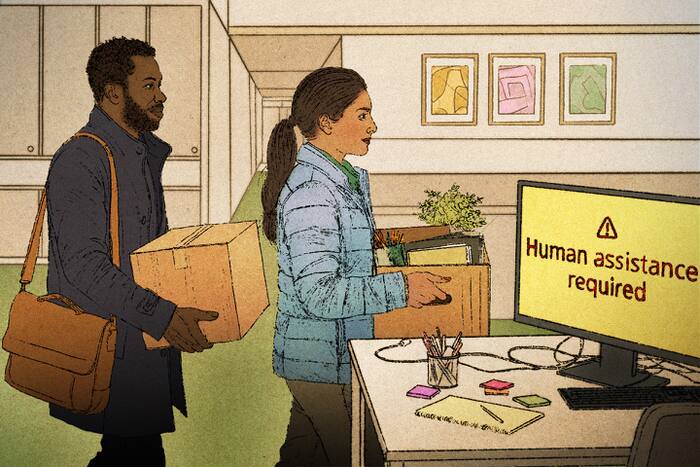
Some companies are laying off employees while citing artificial intelligence as a reason, then later rehiring workers, according to the trend summary. The pattern, described as an “AI boomerang,” reflects businesses reconsidering workforce reductions after finding that AI tools do not replace all the human skills their operations require.
The summary identifies critical thinking, emotional intelligence and oversight as areas where human contributions remain important. It does not name the companies involved or provide figures showing how many workers have been laid off or rehired. It also does not specify when or where the reported cases occurred.
The described sequence is straightforward: employers reduce staff with AI among the reasons given, then bring some employees back after the limits of the technology become apparent. The summary does not provide details about which roles were affected, how long workers were away, or whether the rehiring involved the same positions.
That missing information limits how broadly the trend can be assessed. No individual company accounts, employee perspectives, or data on the scale of the changes were provided. The summary also does not say whether the decisions were driven solely by AI’s capabilities or involved other business considerations.
Still, the trend points to a reassessment of how AI fits into workforce planning. Rather than fully replacing the human abilities cited in the summary, the tools may leave companies needing employees to apply judgment, engage with others and oversee work. The account describes companies responding to that gap by reconsidering earlier staffing decisions, though it does not establish how common the pattern is.
Story summarized from the original created by Cathy Bussewitz, Associated Press on www.clickorlando.com, see more information here.
Media gallery